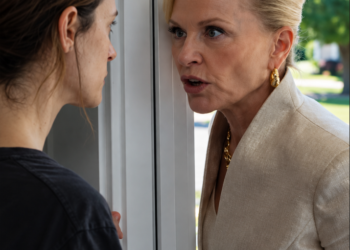


June Morales didn’t sound like a woman trying to sell me something. She sounded like someone who had just realized she’d walked into an argument she knew nothing about.
“The house on Willow Creek Lane,” she said. “Mark and I met last week. He mentioned you’re both considering a smaller place. I sent the preliminary paperwork to the address he provided.”
“I haven’t agreed to list our house.”
There was a rustle of paper. “Then I need to stop this process right here. I’m sorry. I was told you’d been discussing it for months.”
“We haven’t. Please email me anything he gave you.”
She hesitated. “I can send the market analysis and the meeting confirmation. Any signed agreement would need to be handled carefully, and we haven’t reached that stage. I wouldn’t list a jointly owned home without both owners’ authorization.”
I thanked her. When the call ended, Mark was still standing on the porch. I walked back to him, leaving Daisy safely in the car with the windows cracked and the air-conditioning running.
“You tried to sell the house?”
“I requested a valuation. That’s all.”
“The agent was about to meet with both of us Monday. You told her I’d agreed.”
“I thought you’d understand once I explained.”
“You didn’t explain because I might say no. Just like Daisy.”
His face tightened. “We’re in trouble, Nat.”
I had heard people say those words in movies, usually before revealing some impossible secret. In real life they sounded quieter. I asked him what kind of trouble. He stared at the driveway until I repeated the question.
“Money,” he said. “I made mistakes.”
“How much?”
“I need to get the numbers together.”
I wanted to stand there until he gave me every number, but Daisy was waiting in the car. I told him to send the records to my email by morning. He nodded. I drove to my friend Tessa’s place fifteen minutes away, gripping the wheel so tightly my palms ached.
Tessa lived alone in a duplex with a fenced backyard and a pantry full of dog biscuits. She’d been my friend since our first jobs after college. She didn’t ask for the entire story at the door. She opened the gate, let Daisy inspect the grass, and put the kettle on.
When I finally told her, she reached across the table and took my hand. “Are you safe staying here?”
“Yes. I don’t think he’ll hurt me.”
“I wasn’t only asking about that.”
I looked around her kitchen. The dog bowl beside her pantry was already filled. I understood her point without another word.
That night I signed into our shared bank accounts. I had always checked the monthly balance, but Mark handled automatic payments and investments. We’d divided the household work that way years earlier. I paid utility bills and managed insurance claims; he handled the mortgage and savings transfers. Looking at the account now, I saw how much trust had been built into that arrangement.
For four months, withdrawals from our emergency savings had been sent to a business account named KEENE PROJECT SERVICES. The amounts varied: five thousand, eight thousand, another six. Some were described as loans. None had been discussed with me. By the time I reached the newest statement, more than thirty thousand dollars was gone.
The business name belonged to a former colleague of Mark’s, Simon Keene, who had once proposed starting a small renovation company. Mark had laughed off the idea at a barbecue. Apparently he’d stopped laughing after that.
I kept looking. The mortgage payment for the previous month had been returned, then paid late with money transferred from our savings. This month’s payment had not yet cleared. There were late fees I had never seen and an overdue property-tax notice in our online document folder. It wasn’t proof that we were about to lose the house, but it was enough to make me feel that the floor beneath it had shifted.
At midnight I called Rachel. She was still awake in Chicago, sorting medication for our mother after the appointment I’d traveled to help arrange.
“You can come back,” she said. “Bring Daisy. We’ll figure it out.”
“I can’t leave without understanding the finances.”
“Then don’t do it alone. Get someone who knows the rules.”
The next morning I booked a consultation with a local family-law attorney. I also printed statements and changed the passwords to my personal accounts. I didn’t drain joint funds or block Mark from the house. I wrote down every action, because I didn’t trust either of us to remember it clearly later.
At ten, June emailed the material she’d promised. Attached was a comparative market analysis and an unsigned listing proposal. The proposed date was two weeks away. An accompanying note from Mark said, We need a clean transition. My wife is struggling with the loss of our dog, so please be gentle when you discuss timing.
I read that sentence three times. He hadn’t only lied to me about Daisy. He had used my grief as an explanation for why I wasn’t participating in a decision about our home.
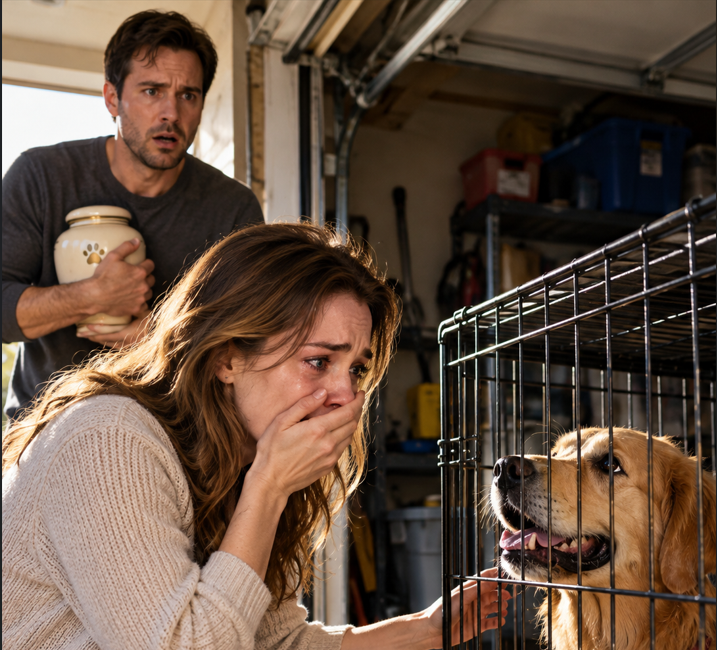
The worst part was that he must have written it while Daisy was alive in a kennel, expecting me to keep crying for her.
I forwarded the email to the attorney’s office. Then I called June and asked her to close the preliminary file until she heard from both of us directly. She agreed.
An hour later, Mark finally sent a photograph of one piece of paper: a letter stating that Keene Project Services had ceased operations. Attached beneath it was a message he hadn’t meant to include, part of his conversation with Simon.
Mark had written: If Natalie finds out about the job before I tell her, she’ll never believe I can fix this.
Simon had replied: You can’t keep pretending you’re still employed.
I sat very still at Tessa’s kitchen table. The business was gone. Our savings were disappearing. And now I understood that the man who’d left for work every morning might not have had a job to go to at all.