

For the first week after the wedding that didn’t happen, people kept using the same phrase: at least you found out in time. They meant well. I sometimes repeated it myself. But every time I opened another cancellation notice or walked into a room where someone stopped talking, I wanted to ask what time they thought I had saved.
I’d already given Ryan four years. I’d spent an entire winter convincing myself the distance between us was ordinary pre-wedding stress. I had defended him when friends mentioned his missed dinners and last-minute trips. Finding out before the vows mattered. It didn’t refund the years I had trusted him to tell me the truth.
At my father’s urging, I met with a family-law attorney named Lauren Ellis. We sat in a small office overlooking a parking lot while she listened, took notes, and asked careful questions. She did not promise to have Ryan arrested or recover every dollar. She explained that the canceled ceremony did not create a marriage between Ryan and me, but our shared rental agreement, accounts, and payments were separate problems. A claim for money would depend on records, ownership, and what each of us could demonstrate.
“The clearest thing you can do today,” she said, “is preserve what you have and stop making financial decisions with him without advice.”
I showed her the statements, Hannah’s invoice, and the note he’d left at my parents’ house. She asked whether I could identify my deposits into the joint wedding account. I could. My paychecks had funded most of the recent balance because Ryan said commission checks had been slow.
“Don’t assume that tells us everything about who owns every dollar,” Lauren cautioned.
“But it gives us a starting point.”
I left with a list of documents to gather and the name of a lawyer who handled civil disputes. It was the least cinematic afternoon of my life. Nobody slammed a folder on a desk. There was no revelation that made all the losses vanish. I felt better anyway, because for once the next step didn’t depend on Ryan becoming honest.
Hannah met with an attorney in Charlottesville about ending her marriage. She called me afterward while I was buying packing tape.
“I keep thinking people will say I should’ve known,” she said.
“They might. That doesn’t make it true.”
“My mother asked whether I still loved him. I didn’t know how to answer.”
I stood beside a shelf of cardboard boxes, letting a man with a shopping cart pass.
“I still miss him sometimes. I think that’s what makes me angriest.”
“Me too,” she admitted.
It was the first conversation we’d had that wasn’t mostly evidence and dates. Somehow it was harder than comparing bank transactions. Missing Ryan felt like betraying ourselves. But the version we missed had existed in everyday details, not only promises. I missed the person who made coffee before I woke up. Hannah missed the person who called her father every Sunday. Both things had happened. Neither made the lies less deliberate.
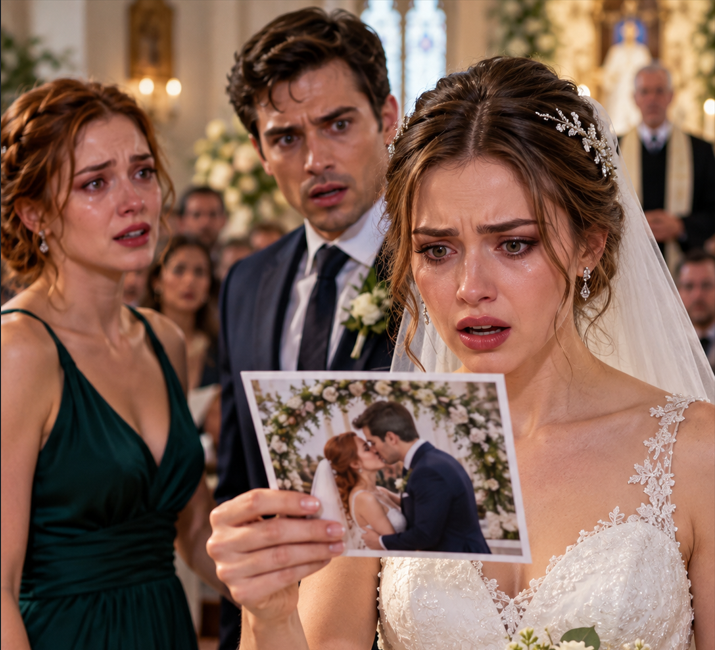
My father wanted to post the wedding photograph online, along with Ryan’s name and an account of what happened. He called it a warning to other women. Claire agreed at first. Their anger had somewhere to go, and I loved them for being angry on my behalf. But I had already watched a room full of people stare at me once. I didn’t want thousands more strangers debating whether I should have noticed earlier.
“I’m not protecting him,” I told my father.
“I’m protecting the parts of my life he doesn’t get to turn into a public argument.”
He held up both hands. “It’s your decision.”
That Saturday Claire accompanied me to the apartment. Ryan was supposed to be staying with a coworker, and he’d agreed by text to be out until evening. We brought boxes for my clothes, books, and family belongings. I’d already arranged to speak with the landlord about the lease rather than assume I could walk away from a contract because the wedding was canceled.
Inside, the apartment smelled of detergent and the lemon dish soap Ryan bought in bulk. My blue sweater lay folded on the sofa. Beside it was the wooden puzzle he’d given me for my birthday. He had left everything exactly where I would see it.
Claire picked up a box.
“Do you want me to put that away?”
“No. Just the things that belong to me.”
In the bedroom, the closet still held his shirts next to my dresses. I took mine down one by one. There was nothing symbolic about it. Some hangers caught on the bar. One sleeve turned inside out. I had to sit on the bed when I found the sweatshirt I wore the night he proposed, but after a few minutes I folded that too.
Ryan arrived while we were carrying the final boxes downstairs. He stood in the hallway, keys in hand, looking as if he’d stumbled into a routine disagreement rather than the wreckage of two weddings.
“I thought we could talk,” he said.
“You agreed not to be here.”
“This is my home too.”
“I know. That’s why I’m taking only my things.”
He looked at Claire. “Can you give us a minute?”
“No,” she said, surprising both of us.
Ryan’s expression tightened.
“Emily, do you really need an audience for everything now?”
A week earlier that might have made me apologize. Instead I handed Claire the last box and stepped to the far side of the hall, where I could still see her by the stairs.
“You transferred twelve thousand six hundred dollars out of our wedding account,” I said.
“You also paid for Hannah’s venue using our shared card. My attorney will be in touch about the money.”
He stared at me. “You’re taking legal advice against me?”
“Yes.”
“I was going to put it back.”
“When?”
“I needed time.”
“You had time to organize two weddings.”
He looked away. For once I didn’t rush to fill the silence or offer him a gentler version of what he’d done.
As we drove off, he sent a message saying he’d explain everything if I met him alone. Then another: You don’t understand why I did this.
I saved both. I wasn’t going to make a private meeting the price of getting an answer. If Ryan wanted to explain, he could do it with witnesses and documents, and he could begin by admitting what everyone had already seen.