

Seeing my three children in the hospital hallway did not erase the previous year.
One night of showing up did not prove that everything had healed.
But when Michael took my coat without making a production of it, Julia went to find a nurse to ask when I could be discharged, and Elise sat beside me without filling the silence, I felt something I had stopped waiting for.
Not the old family.
A different family.
Maybe a more honest one.
I was discharged the next morning.
Michael offered to drive me home. I accepted.
At the gate, he waited for me to open it from my phone.
“You still don’t want me to have the code?” he asked.
“Not yet.”
“Okay.”
There was no offense in his voice.
That answer meant more than many apologies.
Over the next months, I kept my estate decisions in place.
I did not restore my children to the positions they had assumed were theirs. I did not cancel the provisions for my grandchildren or the gifts to organizations Richard and I had cared about.
Thomas helped me review everything one more time so my will, trust provisions, beneficiary designations, and property planning matched both my intentions and New York law.
When I asked whether he thought I was being too severe, he smiled.
“My job is to tell you whether the documents are valid and whether they reflect your wishes. I’m not qualified to decide how much love equals what percentage.”
“Good.”
“There isn’t a very good lawyer for that.”
I laughed.
In November, I invited all three children to the house.
Not to read my will.
I had no intention of turning my future death into an early family event.
I wanted to tell them only what they needed to know so no one would build fantasies around money again.
We sat in the living room.
Richard’s letter was on the coffee table.
“Dad left me this,” I said. “I found it last Christmas.”
I read only the passage about the house.
A place to live.
Not a prize to wait for.
Julia wiped her eyes. Michael stared at the floor. Elise gave a sad little smile.
“I’m not reading you my will,” I continued. “You’ll know what you need to know when the time comes. But I want one thing clear. Do not build your future around my death. What I own is for my life while I’m alive. After that, it will be distributed according to the documents I made and the law that governs them.”
“Okay,” Elise said.
Julia nodded.
“Okay.”
Michael was last.
“Okay.”
Then he added, “And if someday you really do need assisted living or more care?”
A year earlier, the question would have made my entire body tighten.
“Then we’ll talk about it,” I said. “Me, you, the doctors. When there is actually something to talk about. Not before.”
“That sounds fair.”
That was how we decided Christmas.
Not “like old times.”
None of us wanted that phrase anymore.
The old times had contained love, yes. They had also contained habits that helped bring us to the gate that December.
So we planned something new.
Christmas lunch at my house on the twenty-fifth. Everyone would bring a dish. No one would stay overnight. And the people who came would come because they actually wanted to be there.
On Christmas morning, I woke early.
A light snow had dusted the roofs and left the roads mostly clear. I put a pot roast in the oven because Richard had always cooked his too dry, and for thirty years we had argued playfully over which one of us knew how to make it properly.
At 11:20, the intercom rang.
Michael.
“I brought bread. Also, is that red screwdriver still in the garage?”
“Merry Christmas to you too.”
I opened the gate.
Not long after, Julia arrived carrying two casserole dishes. Elise brought dessert. The grandchildren came loaded with presents.
No one entered a code.
No one tried to let themselves in.
Every time, the intercom rang.
Every time, I chose to open the gate.
It might sound like a small thing.
It was not small to me.
At lunch, no one talked about money.
We talked about school, work, and a neighbor of Michael’s who had blocked his driveway for three days.
Julia said she had decided against buying the larger house and was surprised by how relieved she felt.
Elise teased me because I had signed up for two library programs and now seemed to have more plans than she did.
After lunch, Michael followed me into the garage.
Richard’s garden bench was against the wall. One leg had started to wobble.
“Want to fix it?” Michael asked.
I pointed toward the toolbox.
He found the red-handled screwdriver, held it up, and laughed.
“I remembered this thing being gigantic.”
“You were tiny.”
We worked without rushing.
Halfway through, my youngest granddaughter wandered in and insisted on helping. Michael showed her how to keep a screw straight.
For one second, watching him, I saw Richard in the same garage leaning over our son’s hands.
I did not think everything had gone back to the way it was.
I thought maybe it did not need to.
That evening, as everyone got ready to leave, Julia lingered by the front door.
“Mom, can I ask you something?”
“Depends.”
She smiled.
“It’s not about the will.”
“Then your odds are good.”
Her voice dropped.
“When you were in the hospital the first time, I’m sorry. Not for everything that happened afterward. For that night. I should have called. I should have come.”
I looked at her.
I had imagined those words hundreds of times. In my imagination, they repaired something instantly.
In reality, they did something smaller and more honest.
They named a wound.
“Thank you,” I said. “I was really scared.”
Julia hugged me.
I hugged her back.
Michael waited his turn without turning it into a ceremony.
“I should have been there too.”
Elise took my hand.
“Me too.”
“I know.”
I did not tell them it did not matter.
It mattered.
I did not tell them everything was forgotten.
It was not.
Forgiveness, I had learned, did not require falsifying the past.
When their cars pulled away, the gate closed slowly behind them.
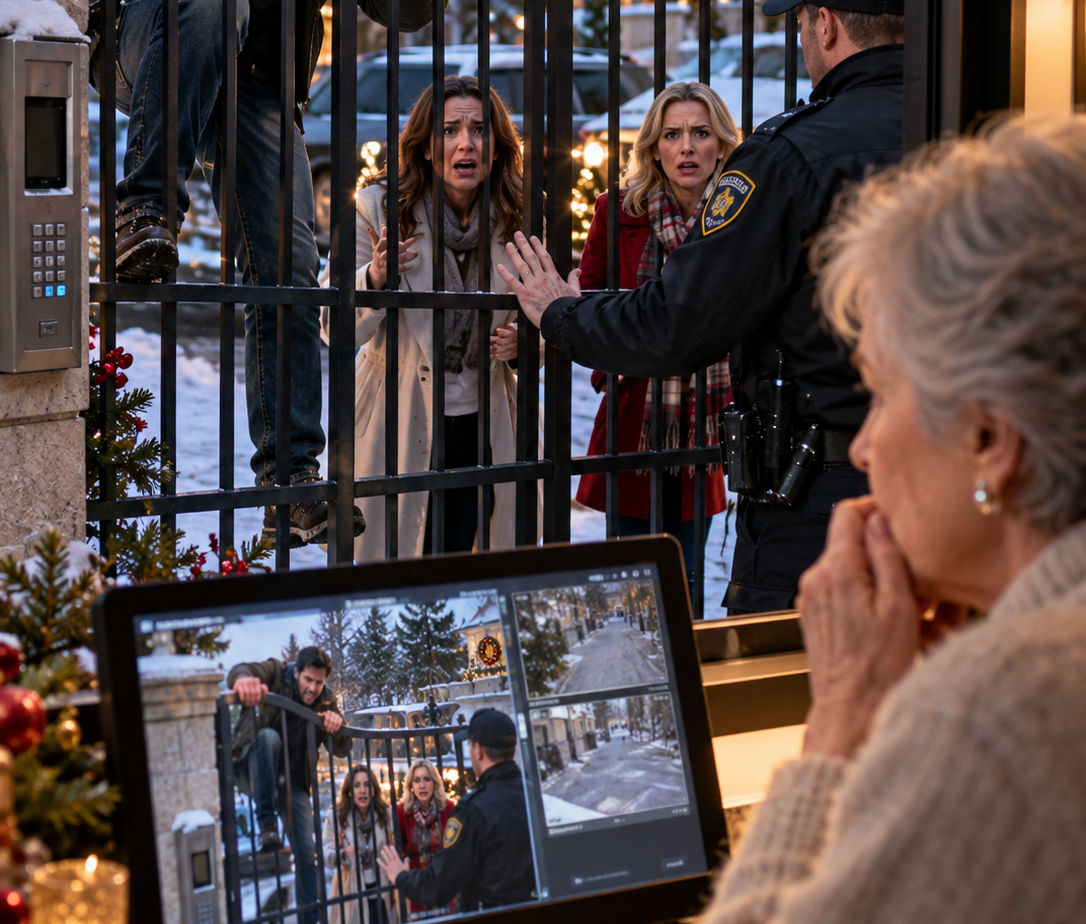
A year earlier, I had watched that same metal separate me from my children.
That night, I watched it simply protect my home.
I went back to the kitchen.
There were dishes to wash, crumbs under the table, and a scarf forgotten over the back of a chair.
The house looked lived in.
Not occupied.
I picked up Richard’s letter and returned it to the drawer, this time placing it on top of the other papers.
I had not changed my estate plan to teach my children a lesson.
I had changed my life because I finally understood that being a mother did not mean handing over everything I was in advance.
My children had their own lives.
Michael had been right about that much.
The difference was that now I had mine too.
And when someone rang the gate, I no longer opened it because I was afraid of being left alone.
I opened it because I chose to.
THE END.