

I kept Michael’s note on the kitchen table for four days.
Not to punish him by making him wait.
I needed to know whether I could sit across from my son without automatically returning to the role I had played all my life: he brought a problem, I found a solution.
Finally, I called.
“Sunday at four. Come alone.”
“Okay.”
“The gate will open when you ring.”
I did not give him a code.
On Sunday, he arrived five minutes early.
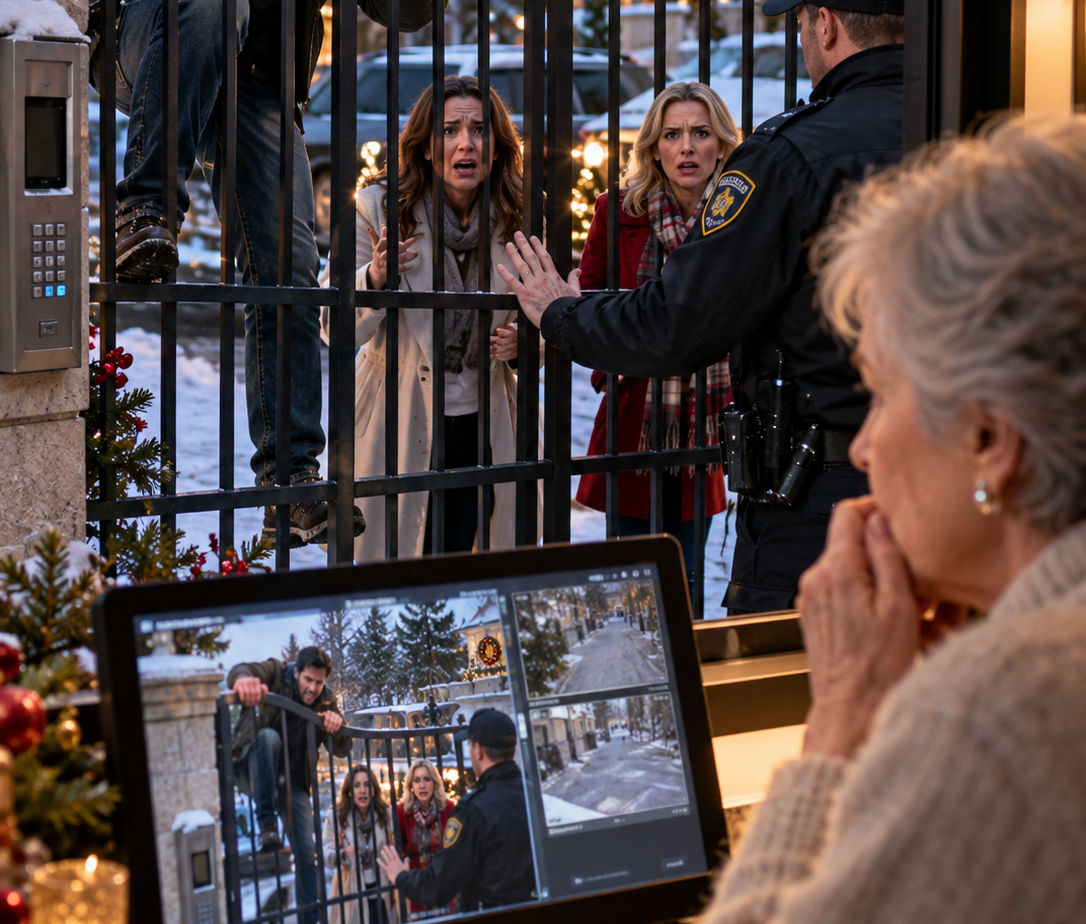
From the window, I watched him stand at the gate without touching the keypad. He pressed the intercom once.
I opened it.
He walked in.
He looked older than he had a few months before, not dramatically so. He had simply stopped wearing certainty like a pressed suit.
We sat in the kitchen, in the same place where I had cried after the phone call that started everything.
Michael looked at the coffee cup in front of him.
“I tried to figure out what to say without turning it into an excuse.”
“Did you?”
“I don’t know.”
I waited.
He told me that when the company started losing money, he told no one the truth. He kept paying expenses he could no longer afford, certain the next quarter would solve everything.
When he first thought about my estate, he said, it had been only a number in his head.
Someday I’ll inherit something. So I can keep going.
Then “someday” started leaking into decisions he was making now.
“It sounds horrible when I say it out loud.”
“It is.”
He looked up, startled.
“It doesn’t help you if I pretend it isn’t.”
Michael nodded.
“When you went to the hospital the first time, for a few hours I was scared you were going to die. Then you texted that you were okay, and I felt relieved. But there was another thought. I hate even remembering it.”
My hand tightened around my cup.
“I wondered what would happen with the house.”
The pain came cleanly.
I did not yell.
I did not stand up.
I let it exist.
“Thank you for telling me,” I said eventually.
“It doesn’t mean I wanted you dead.”
“I know.”
“But it means I had already turned something that belonged to you into a solution for me.”
That was the truth I had been looking for.
Not a conspiracy.
Not three children sitting around a table plotting my death.
Something much more human and, because of that, more painful.
They had stopped seeing me completely.
And for years I had helped create that pattern by making my support look endless.
“I have some responsibility too,” I said.
Michael shook his head immediately.
“No, Mom.”
“Let me finish. I am not responsible for your choices. But I trained all of you to believe I would always fix things. Even when your father was alive, I remembered, paid, organized, and forgave. When you became adults, I kept doing it. Maybe being needed made me feel less alone.”
I thought about Richard’s letter.
“But a mother helping her children does not sign a contract agreeing to be used.”
“I know.”
Michael told me the company would survive in a smaller form. He had sold a share, reduced his salary, and listed their second car for sale. His wife had learned the full extent of the debt, and their marriage had been shaken, but they were facing it together.
“The consultation you paid for helped,” he said. “Not because the guy found money. Because for the first time someone made me put every number on the table.”
“I’m glad.”
“I won’t ask you for anything else.”
“Good.”
He gave a faint smile.
“You’ve gotten tough.”
“No. I stopped softening every consequence.”
We talked for almost two hours.
Before leaving, Michael stopped in the entryway in front of Richard’s photograph.
“Can I ask you something that isn’t about money?”
“Yes.”
“Do you still have Dad’s old tool set?”
“In the garage.”
“When I was little, he used to let me hold that red-handled screwdriver. I thought it was enormous.”
“It was enormous in your hands.”
He laughed.
I had not heard that sound in my house for a long time.
I did not give him the tools.
Not yet.
But I told him that someday we could fix the garden bench Richard had built.
Through the summer, our relationships changed slowly.
No one got the old permanent gate code back.
My children came when I invited them. I visited when I wanted to.
If they did not answer a call, I stopped treating every silence as abandonment. If I needed help, I learned to ask for something specific instead of turning the request into a test of love.
In September, I had another episode of chest pain.
It was not a heart attack, but the doctor wanted to keep me overnight for observation.
Sitting on the hospital bed, I stared at my phone and remembered the night a year earlier.
I called Elise.
She answered on the second ring.
“Mom?”
“I’m in the emergency room. I’m okay, but they’re keeping me overnight.”
“I’m coming.”
“You don’t have to rush.”
“I’m not rushing. I’m coming.”
Ten minutes later, Julia called.
Then Michael.
At 11:40, after a nurse brought me back from another test, I found all three of them in the hallway.
They had not called my attorney.
They had not asked about the house.
They had simply come.
And that time, I had to decide what their presence meant.
My first reaction was almost irritation. Part of me wanted to tell them there was no need, that I could take a cab home like last time.
It was pride dressed up as independence.
Then I realized I was in danger of making the opposite mistake. Before, I had begged for presence. Now I could have rejected it just to prove I did not need anyone.
So I let them stay.
Michael brought me water. Julia asked whether I had my phone charger. Elise texted Theresa, with my permission, to tell her I would not be home that night.
Small gestures. Almost ordinary.
That was why I trusted them more than a grand speech.
Nobody promised to be perfect from then on.
After everything that had happened, I preferred one occupied chair in a hospital hallway to a hundred declarations about the future.