

Mara Ellis had represented my grandmother during the last two years of her life. She understood why I had waited eight months to call.
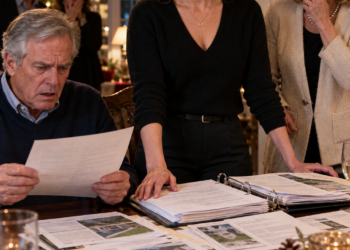
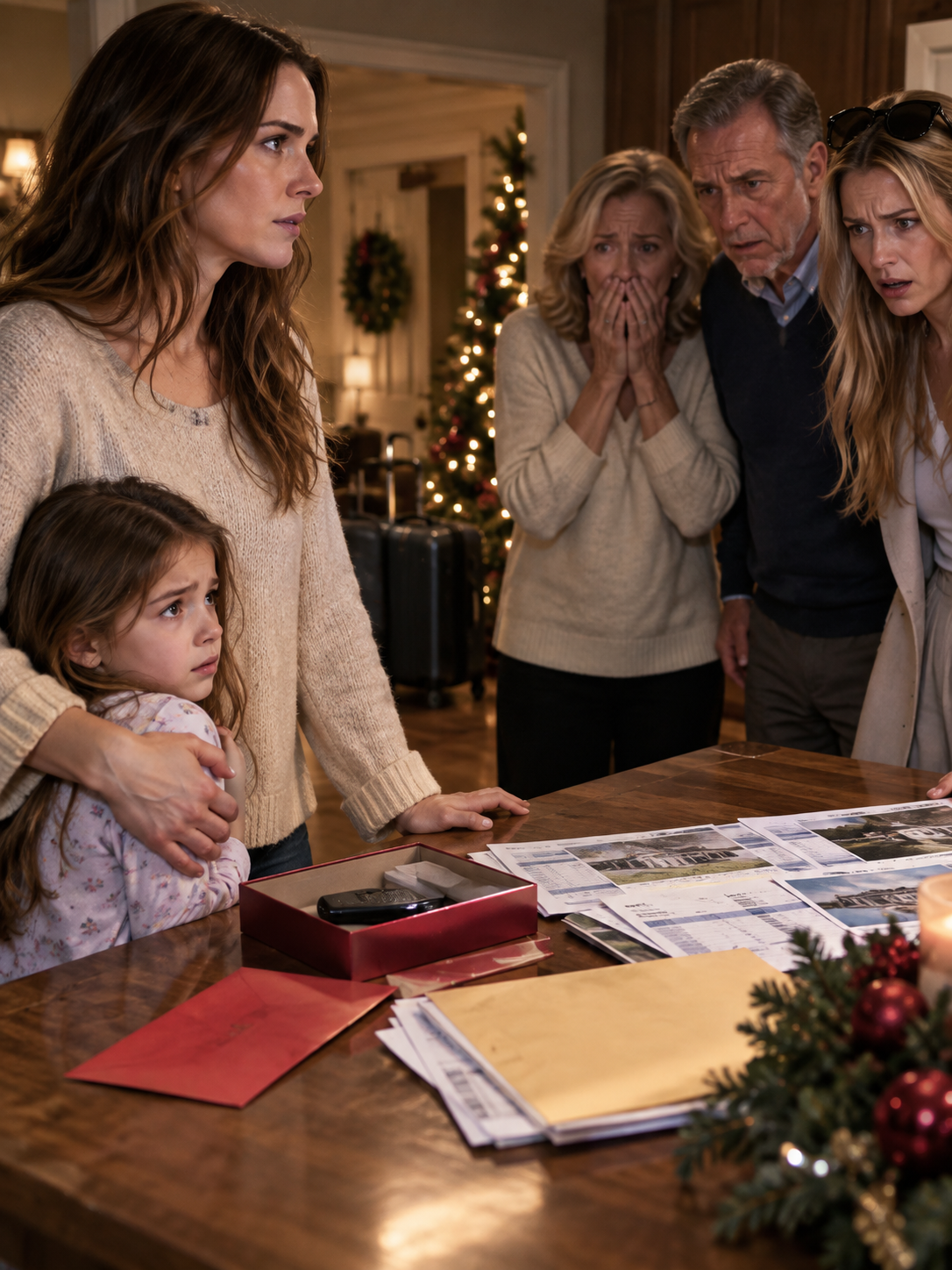
By noon on Christmas Day, we were sitting at my kitchen table while Ava colored in the next room. Mara had asked me to send photographs of every document in the file box before she came over. She arrived with a laptop, a yellow legal pad, and the expression of someone who had already found something she disliked.
“First,” she said, “the child-abandonment issue and the trust issue stay separate. Don’t threaten your parents with one to gain leverage on the other.”
“I wasn’t planning to.”
“Good. Second, don’t contact the bank yourself until I know exactly what was signed and what authority your father had.”
I pushed the copy of the loan agreement toward her. “That isn’t my signature.”
She looked at it, then at me. “Are you certain?”
“Yes.”
The document was a personal guaranty attached to a $480,000 business line of credit. The borrower was Bennett Property Holdings, the entity my father used to manage the building my grandmother had left to her three grandchildren: me, Allison, and our cousin Daniel. My father was trustee until the youngest beneficiary turned thirty-five.
I was thirty-four.
The guaranty listed my inherited interest as part of the collateral package.
Mara read in silence for several minutes.
“What did your father tell you this loan was for?”
“He didn’t tell me there was a loan.”
That made her stop.
I opened another folder. “I started getting tax documents that didn’t match the distributions he reported. Then I found county filings showing a lien. When I asked him, he said it was routine refinancing.”
“And Allison’s company?”
I showed her six transfers from the trust account to Northline Interiors, Allison’s business. The amounts ranged from $18,000 to $62,000. Each was labeled renovation consulting.
“The building hasn’t been renovated,” I said. “I drove by. Same tenants. Same lobby. Same everything.”
Mara’s eyes moved down the page.
“Could Allison have done design work that wasn’t visible from outside?”
“Maybe. That’s why I didn’t accuse her of fraud. But I asked her for invoices.”
“What did she say?”
“She told me Dad handled it.”
Mara leaned back. “That sentence is going to matter.”
By early afternoon, we had separated what I knew from what I suspected. Mara was strict about it.
Known: my signature appeared on a guaranty I had never signed.
Known: my father had not disclosed the line of credit to me.
Known: trust funds had been transferred to Allison’s company.
Suspected: the transfers were not legitimate business expenses.
Unknown: whether Allison knew the money came from borrowed funds secured by trust property.
For once, someone put boundaries around the chaos.
For years, my family had argued by flooding the room with emotion until facts became rude. If I asked why money was missing, my father talked about everything he had sacrificed. If I asked Allison for an invoice, she talked about how hard she had worked to be taken seriously. If I asked my mother why she defended them, she asked why I was determined to destroy the family.
Mara did not care who felt insulted.
She cared what could be proved.
At three, Ava wandered into the kitchen carrying a paper crown she had made from construction paper.
“Can I show Ms. Mara my castle?”
Mara closed the financial file immediately.
“Absolutely.”
I watched her crouch beside Ava and listen to a five-minute explanation of a blanket fort with two entrances and a stuffed rabbit designated as security.
After Ava returned to the living room, Mara looked at me.
“Did your parents tell you when they’d be back?”
“December twenty-eighth.”
“And do they know you filed a police report?”
“I don’t think so.”
“Then we use the next three days carefully.”
She drafted a preservation letter instructing the trustee not to destroy financial records. She prepared a request for a complete accounting of the trust. She also told me to contact the lender’s fraud department the next business morning, with her on the call, and to state only what I knew: I disputed the signature and had not authorized the guaranty.
“No speeches,” she said. “No accusations you can’t support. Let the documents do the work.”
That night, my mother finally texted.
I saw you called. We are with family and will not participate in drama. Ava had food, heat, and a phone. You were supposed to get off work early. We needed a break too.
I read the message three times.
I had never been scheduled to get off early.
My shift was posted on the hospital calendar. My mother knew that because she had asked me twice what time I would pick Ava up on Christmas morning.
I took a screenshot and sent it to Mara.
Then another message arrived, this one from Allison.
Please don’t make Mom’s trip miserable because you’re mad she stopped babysitting for free.
I did not respond to either of them.
The next morning, Mara joined me by speakerphone when I called the lender. The fraud specialist asked routine questions. Full name. Date of birth. Whether I recognized the guaranty. Whether I had signed electronically or in person. Whether anyone had permission to sign on my behalf.
“No,” I said each time.
There was a long pause while she typed.
“Ms. Bennett, I need to tell you something. The file contains a copy of your driver’s license.”
I looked at Mara.
My old driver’s license had disappeared the previous spring. I had assumed I lost it during a move.
“What address is on it?” I asked.
She read my previous address.
The license I had reported lost.
The specialist continued. “There is also a notarized signature page dated April fourteenth.”
April fourteenth.
Easter weekend.
I had been working a double shift at the hospital.
“Who notarized it?”
“I can’t release that until our review is opened, but I can place a temporary hold on additional draws while we investigate your dispute.”
Mara wrote something on her pad and turned it toward me.
Do it.
“Yes,” I said. “Please place the hold.”
By noon, the lender had frozen access to the unused portion of the credit line.
At 12:43, Allison called me for the first time since leaving for Florida.
I let it ring.
Then my father called.
Then my mother.
Then Allison again.
Within ten minutes, I had nine missed calls.
The tenth came from my father.
This time he left a voicemail.
His voice was low and controlled.
“Rachel, whatever you just did, undo it. You have no idea what you’re interfering with.”
I played it once for Mara.
She did not look surprised.
“Save that,” she said.
I saved it.
Then I looked toward the living room, where Ava was teaching her stuffed rabbit how to use the emergency contacts on her watch.
For the first time in my life, my father sounded afraid of something I had done.
And for the first time, I did not feel responsible for making him feel better.