

Thomas saw me on January 3. Three folders sat on his desk beside a cup of coffee that had gone cold.
I told him about Elise without handing over the group-chat screenshot like evidence for a prosecution. I was not preparing revenge. I was trying to prevent the expectations poisoning the present from becoming a war after my death.
“I want my grandchildren protected,” I said. “But I don’t want their parents treating that money like an advance for themselves.”
Thomas nodded.
“We can structure the trust provisions carefully and make sure your beneficiary designations, will, and any trust documents work together. Adult children don’t automatically have a claim to a parent’s estate the way a surviving spouse may have statutory protections, but that doesn’t mean you want a sloppy plan that invites a contest.”
That was exactly what I wanted to avoid.
I did not want a dramatic document designed to make a point and collapse under challenge. I wanted a valid plan.
“Then let’s do it correctly.”
We reviewed everything again.
The house would remain mine as long as I wanted it. I would direct the portions I controlled according to my own priorities. The grandchildren’s provisions would be structured around education and real needs, with safeguards so their parents could not simply treat the money as personal cash.
My children would receive what I intentionally chose to leave them under a legally sound plan. But nobody was going to behave as though my estate had already been divided while I was alive.
Thomas looked at me over his glasses.
“The most important thing, Maggie, is that you keep living according to your choices. Your estate plan cannot become the center of your life.”
“For years, they were the center of my life.”
“And now?”
I thought about it.
“Now I need to find out what’s left when I stop waiting.”
I started small.
I went back to the library book club I had abandoned after Richard’s death. I accepted Theresa’s invitation to lunch. I began driving to the farmers market on Saturday mornings, not because I needed anything in particular but because I liked choosing apples, hearing people argue over bread, and feeling part of the world.
The first week, Michael called six times.
I did not answer.
On the seventh call, he left a message.
“We need to resolve this before it gets worse.”
The situation, I thought, had become worse when they started planning my life without me.
Julia tried another approach. She sent pictures of the grandchildren. A school performance. A birthday cake. A drawing.
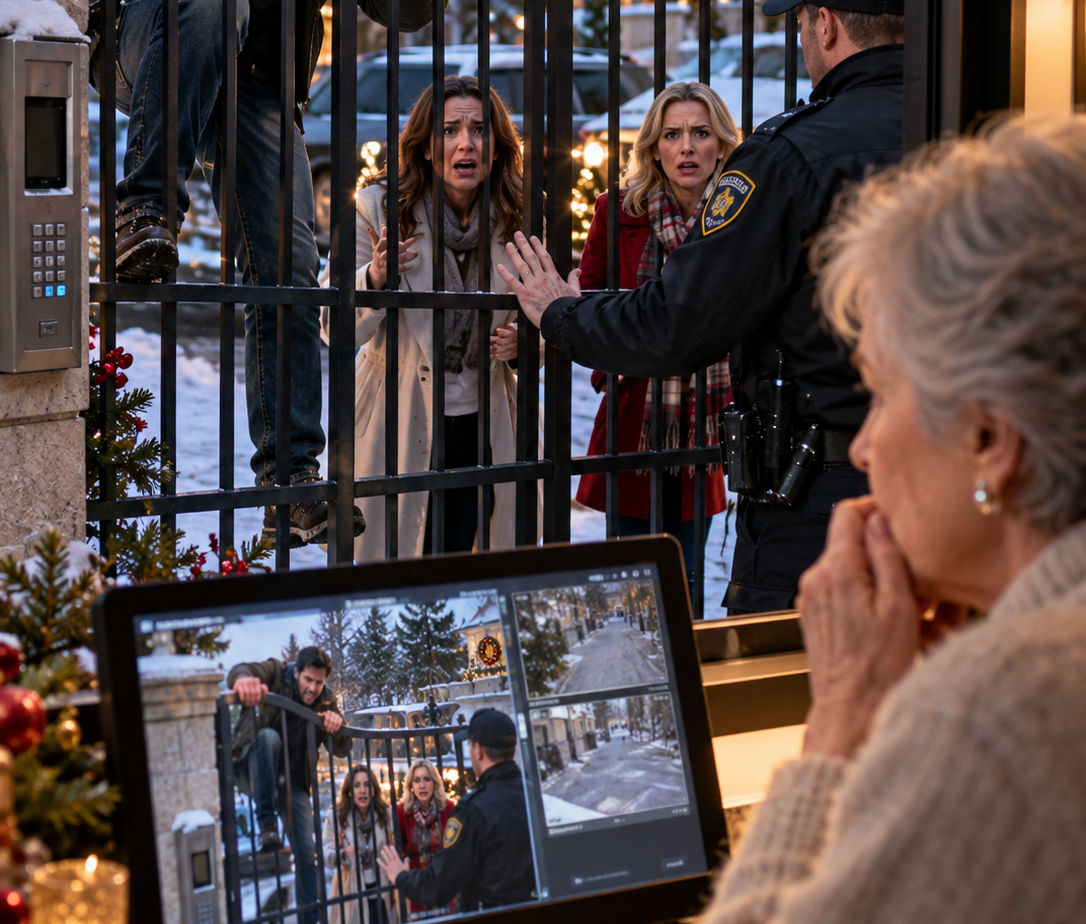
No mention of money. No mention of the gate.
For two days I let myself wonder if it was peace.
Then came the message.
The kids are hurting because you’re keeping them out of this.
I answered her for the first time.
The kids are not out of my life. You adults need to stop using them to get through doors I have asked you not to enter.
Julia called immediately.
“How can you say that?”
“Because on the twenty-third, you reminded me the children were in the cars while asking me to open a gate after I had told you not to come.”
“We were trying to help you.”
“You had already scheduled a senior living tour.”
The silence told me Elise had told the truth.
“Who told you that?”
“That isn’t the important question.”
“Elise, right? She’s trying to make herself look like the good one.”
“Julia, listen to me. I’m not interested in dividing you into good and bad. I’m interested in none of you making decisions for me.”
Her tone changed.
“Mom, you’re seventy-two. Thinking about the future is normal.”
“I have thought about it. With my doctor and my attorney.”
“Without your children.”
“My children told me to learn to manage on my own.”
The sentence stayed between us like a locked door.
Two days later, Michael showed up at Thomas’s office without an appointment. Thomas refused to see him.
That night, Michael left me an angry message saying Elise was turning me against them and that someone needed to look into “who was advising me.”
Instead of frightening me, it clarified things.
I contacted all three children and proposed one meeting in a neutral place with Thomas present.
No spouses.
No grandchildren.
Not at my house.
“If you want to talk about my future,” I wrote, “you will do it while I am in the room.”
They agreed.
A week later, we met in Thomas’s conference room.
Julia arrived first in a camel-colored coat, her shoulders rigid. Michael came in without saying hello. Elise sat apart from the other two.
Thomas opened the meeting.
“Margaret is here to clarify her decisions. We are not going to discuss confidential details of her estate beyond what she chooses to share.”
Michael folded his arms.
“We just want to make sure she isn’t doing something she’ll regret.”
“I’m the one who wants to make sure of something,” I said. “I want to know that you understand I am alive.”
Julia frowned.
“You talk about my house like it’s future cash. My savings like they need to be organized. My old age like it’s a logistics problem. But I am still here. And while I am here, that money exists first for my life.”
Michael slapped a hand on the table.
“So you disinherited us.”
Thomas spoke immediately.
“That is not what she said.”
I looked at my son.
“It’s interesting that was your first question.”
The color left his face.
Then Julia said the sentence that changed the meeting.
“Tell her, Michael. Tell Mom why you’re in such a hurry.”
Before the meeting, I had been afraid I would lose control and list every missed phone call, every cold text, every Sunday I had spent waiting.
I discovered I did not need to.
The essential facts were simple. I had been sick. I had asked for presence. They had pulled away. Then they began discussing my property without involving me.
Everything else was pain.
Pain did not become more true because I repeated it.
Thomas had suggested I write down what I wanted from the meeting. On a piece of paper in my purse were three words:
Autonomy. Respect. Clarity.
I never took it out.
I simply remembered it whenever the conversation threatened to turn into a contest over who had suffered more.
I did not want my children humiliated.
I wanted them unable to pretend they did not understand.