

The heading said: FAMILY LOANS — SIGNED AGREEMENTS AND OUTSTANDING BALANCES.
My mother recognized the page because she’d signed the agreement behind it.
For several seconds she stared at my hand, as though the paper might disappear if she refused to look up.
“Where did you get that?” she whispered.
“From the filing cabinet in my own house.”
My father leaned closer, then pulled back when he saw his signature below hers.
Matt looked between us, genuinely confused.
“What agreement?” he asked.
I kept the folder open where they could see it.
Two years earlier, John and I had lent my parents thirty thousand dollars after they said their mortgage was in trouble.
They had promised to repay us over eighteen months.
John insisted on putting the terms in writing, not because he wanted to punish them, but because our daughter’s savings were involved.
We had transferred the money from the account we maintained for emergencies and family expenses, not from Emma’s education fund.
My parents signed the agreement at our kitchen table.
They made two payments, then stopped returning John’s messages about it.
“John kept the original,” I said.
My mother swallowed.
“That was years ago. You can’t bring that up now.”
“It was two years ago, and it never stopped being a debt.”
Dad rubbed his forehead.
I could see him calculating how much I might actually know.
The next pages contained dates, bank transfer confirmations, and notes John had made after conversations with them.
There were also records of smaller loans we had never tried to collect.
I had spent the previous evening sorting them, needing some task that didn’t require me to look toward the empty place at our dinner table.
I hadn’t expected them to show up that morning.
I had only wanted to understand why John had been so worried.
Every bank statement carried his small pencil marks.
He had carefully written dates beside the amounts, the same way he tracked Emma’s school payments.
Looking at those marks was almost harder than reading my mother’s messages.
He was still trying to protect our family after he was gone.
Matt frowned.
“Mom told me you gave them that money.”
“She told you what she needed you to believe,” I said.
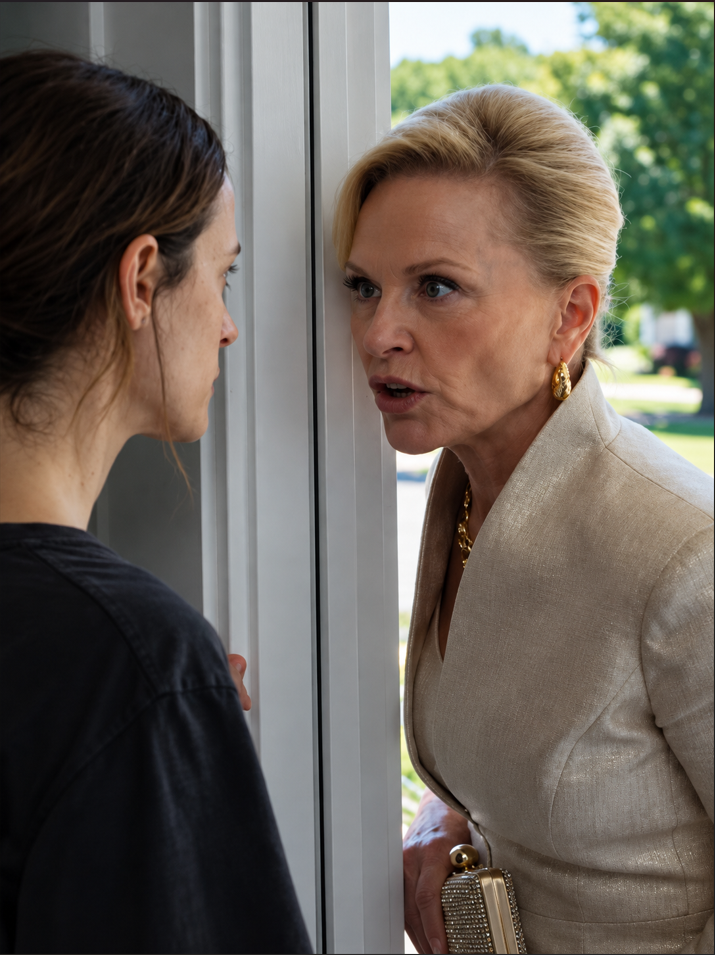
“Naomi!” my mother snapped.
I closed the folder halfway.
“I need you to leave.”
Dad lifted both hands.
“Let’s be reasonable. We all know you’re hurting.”
That familiar sentence almost made me smile.
They had used my feelings to dismiss every disagreement since I was a teenager.
If I was angry, I was sensitive.
If I said no, I was selfish.
If I asked for repayment, I was counting pennies against blood relatives.
“I’m not discussing a new loan,” I told him.
“I’m not signing anything, and I’m not giving Matt access to John’s accounts.”
My mother blinked.
“Who said anything about John’s accounts?”
“Then there should be no misunderstanding.”
For the first time, Matt looked uncomfortable rather than impatient.
He glanced at the folded funeral program on the table behind me.
Emma’s school photograph was printed on the front beside John’s.
He looked away almost immediately.
“It’s not like we didn’t care,” he muttered.
“You could have called from the airport. You could have called from the hotel. You could have said her name.”
My voice broke on the last sentence.
I hated that my mother seemed relieved by it, as though tears meant she could steer the conversation again.
“Sweetheart, you’re overwhelmed,” she said softly.
“Let us inside. We’ll talk after you’ve had some rest.”
“No.”
She stared at me.
It was such a small word, but I’d rarely said it to her without immediately explaining myself.
Dad reached for the folder.
I pulled it back.
“Don’t,” I said.
He lowered his hand.
I told them any discussion of the old agreement would have to be in writing, and I would decide later whether to pursue repayment.
Today they needed to leave me alone.
My mother stepped away from the threshold.
“You know what people will say if you turn your own parents away?”
“I know what they saw on your Facebook page while I was burying my family.”
Matt flinched, but Dad guided my mother down the steps before she could answer.
I watched their car back out of the driveway.
Then I shut the door and stood against it, breathing as if I’d carried something heavy upstairs.
The silence returned.
I put the folder on the console and sat beside Emma’s backpack.
A little paper star was tied to one zipper.
She had made it at school and insisted it brought good luck.
For a moment I could almost hear her asking why I was sitting on the floor.
I cried until I could no longer see the hallway clearly.
Later that afternoon, our neighbor, Linda, came by with soup.
She had collected Emma from school more than once and knew better than to ask me to be brave.
I showed her my mother’s message because I needed one person to tell me I hadn’t imagined it.
Linda read the screen and sat down beside me.
“You don’t have to answer them again today,” she said.
We ate in silence.
Before she left, she offered to be there if I wanted someone present for another conversation.
I said I did.
It was the first request for help I’d made since the funeral that didn’t leave me feeling ashamed.
That evening, while looking for a photograph to place beside Emma’s bed, I found an envelope tucked inside John’s desk calendar.
My name was written on it in his neat handwriting.
It wasn’t sealed.
Inside were copies of the loan agreement and a short note: If they ask again, check the dates before you answer.
Beneath that sentence was a second page I hadn’t seen in the black folder.
It listed a transfer made just six weeks earlier, with Matt’s restaurant named in the bank memo.
The sender wasn’t me or John.
It was my mother.
And the amount was thirty thousand dollars.
Why had she claimed she couldn’t repay us when she’d sent the same amount straight to Matt?
To learn what my mother had done with the money, continue with Part 3.