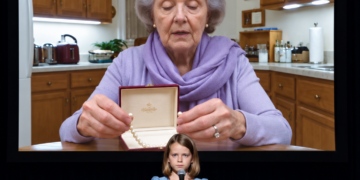



“Yes,” Marcus told Sophia.
Then he took a breath.
“If something changes, I’ll tell you myself. I won’t let you wait for somebody who isn’t coming.”
It was not a promise to become the father she’d imagined overnight.
It was small enough to keep and serious enough to matter.
Sophia considered it for a moment, then went out to join her brothers and sister.
I didn’t thank Marcus.
Neither of us deserved applause for deciding our children should not be left waiting.
In February he returned for the next scheduled visit.
Then again in March.
At first, the meetings were awkward collections of questions and pauses.
Marcus learned that Noah hated being compared to Ethan, even though they often chose the same games.
He learned that Ethan took things apart to understand them and was deeply offended when anyone called that breaking something.
Sophia preferred talking while she walked, not sitting across a table like a witness.
Olivia sometimes needed twenty minutes before she felt comfortable speaking at all.
One Saturday in early spring, heavy weather disrupted Marcus’s travel plans.
He called the evening before, just as he’d said he would.
We arranged a video call and another visit for the following weekend, after checking that the children wanted it.
Olivia was disappointed anyway.
“He said he’d come,” she told me.
“He did,” I answered.
“And he told us why he can’t this time. You’re allowed to be disappointed.”
Later, Marcus spoke to her alone with me nearby.
He listened instead of defending the weather.
The following weekend he arrived when he’d promised.
That didn’t erase the missed day, but it gave her something real to measure against it.
The legal process moved more slowly than any of us liked.
We established parentage through the appropriate proceedings and worked out a parenting schedule guided by the children’s needs.
Marcus began paying support under the arrangement reached with legal advice.
There were documents to sign, practical expenses to divide, and discussions I hated having with a person who once treated me as though I didn’t exist.
None of those tasks felt like revenge.
They felt like finally assigning adult responsibility where it belonged.
Leah sent me one final message in May.
She had ended the engagement.
She said the broken trust between her and Marcus had been too much to build a marriage on.
I wished her well and put the phone away.
Her decision didn’t make me victorious.
She had lost the future she’d imagined, and I knew what that felt like.
Patricia visited Austin at the end of summer.
She asked for one afternoon, and I agreed only after all four children said they were comfortable with it.
We met at a public park.
She brought no expensive presents, only a small album with pictures of Marcus as a child, after I’d checked with the children that they wanted to see them.
“That’s his bike?” Ethan asked, pointing to a photograph.
“He rode it down our driveway and broke the bell,” Patricia said.
Noah laughed.
Sophia wanted to know whether Marcus had ever played an instrument.
Olivia stayed at the picnic table beside me, drawing a yellow house with five figures in the yard.
When Patricia asked who the figures were, Olivia named herself, her siblings, and me.
Patricia didn’t ask why there wasn’t a sixth.
I noticed the effort it took her not to ask.
Before she left, she said quietly, “I was afraid of losing my son if I questioned him. I never stopped to consider what he might have done to you.”
“He made his own choices,” I said.
“So did you.”
She nodded.
That was enough for the afternoon.
I didn’t need to absolve her to allow the children the chance to know her.
I also didn’t need to hand her a place in our lives that she hadn’t yet earned.
By November, Marcus had attended school performances, watched a basketball game, and helped Ethan finish a bridge for a science project during one of their visits.
He still lived in Colorado.
He still had work and a life that didn’t revolve around us.
He and I still disagreed about schedules.
But when something important happened, he asked the children directly whether they wanted him there, and he worked with me instead of around me.
The greatest change happened quietly.
The children stopped asking me to interpret every message he sent.
They could tell him themselves when they were angry or busy or uninterested.
Noah sometimes called him Marcus, sometimes simply said “he.”
None of us corrected him.
Being related by blood hadn’t created trust instantly, and I wasn’t going to force a title to pretend otherwise.
On Christmas Eve, nearly a year after the visit to Boulder, we decorated our tree at home in Austin.
Four handmade ornaments hung beside the lights.
Noah’s was a basketball.
Ethan’s was a tiny cardboard bridge.
Sophia painted a musical note, and Olivia drew a bright yellow house.
Our kitchen smelled of cinnamon, and the same holiday movie we’d watched in the Boulder hotel played in the next room.
Marcus had asked whether the children wanted a video call on Christmas afternoon.
They’d said yes, after breakfast and after opening presents.
He hadn’t tried to move the holiday to his mother’s house.
Patricia sent a card addressed to each child separately, with a few lines about something that child had shared with her.
I put the cards where they could decide when to open them.
That night, after the children went upstairs, I found the receipt for the helicopter charter tucked inside an old folder.
For a moment I saw Patricia dropping her glass and Marcus staring at four faces he should have known long before that day.
I had spent years imagining that a grand entrance could show him everything he’d lost.
Instead, the most important parts of our lives had always been too ordinary for a spectacle: medicine measured in the dark, homework spread across the table, four voices calling for me at once.
I filed the receipt away and turned off the kitchen light.
The next morning, four children would race downstairs, arguing about who could make pancakes first.
They would have questions for the adults in their lives, and the freedom to ask them.
I could not promise they would never be disappointed.
I could promise they would never have to earn the right to be believed.
We had been a family before Marcus opened his eyes to us.
Whatever happened next, that was the part of our story no one could take away.
[ THE END.]
The Christmas morning I brought my children to that house, I thought the hardest thing would be watching their father recognize them. I hadn’t expected the smallest question in the room to uncover how much of my own anger I had carried into their lives. For years I had told myself that protecting them meant never looking back. Then four children stood beside me while the adults struggled to tell the truth. I still remember a glass breaking on the stone and a little hand finding mine. What stays with me isn’t the sound of that glass. It’s what my son needed to ask after the room went quiet.