


I had not entered my childhood home since New Year’s Eve. When Dad asked whether I wanted to come, my first instinct was no. Then I remembered how many decisions I had made by avoiding discomfort and calling it peace.
Mom opened the door before we rang. The Christmas decorations were gone. Without them, the house looked smaller. The hallway where I had overheard her conversation with Carol was just a hallway again.
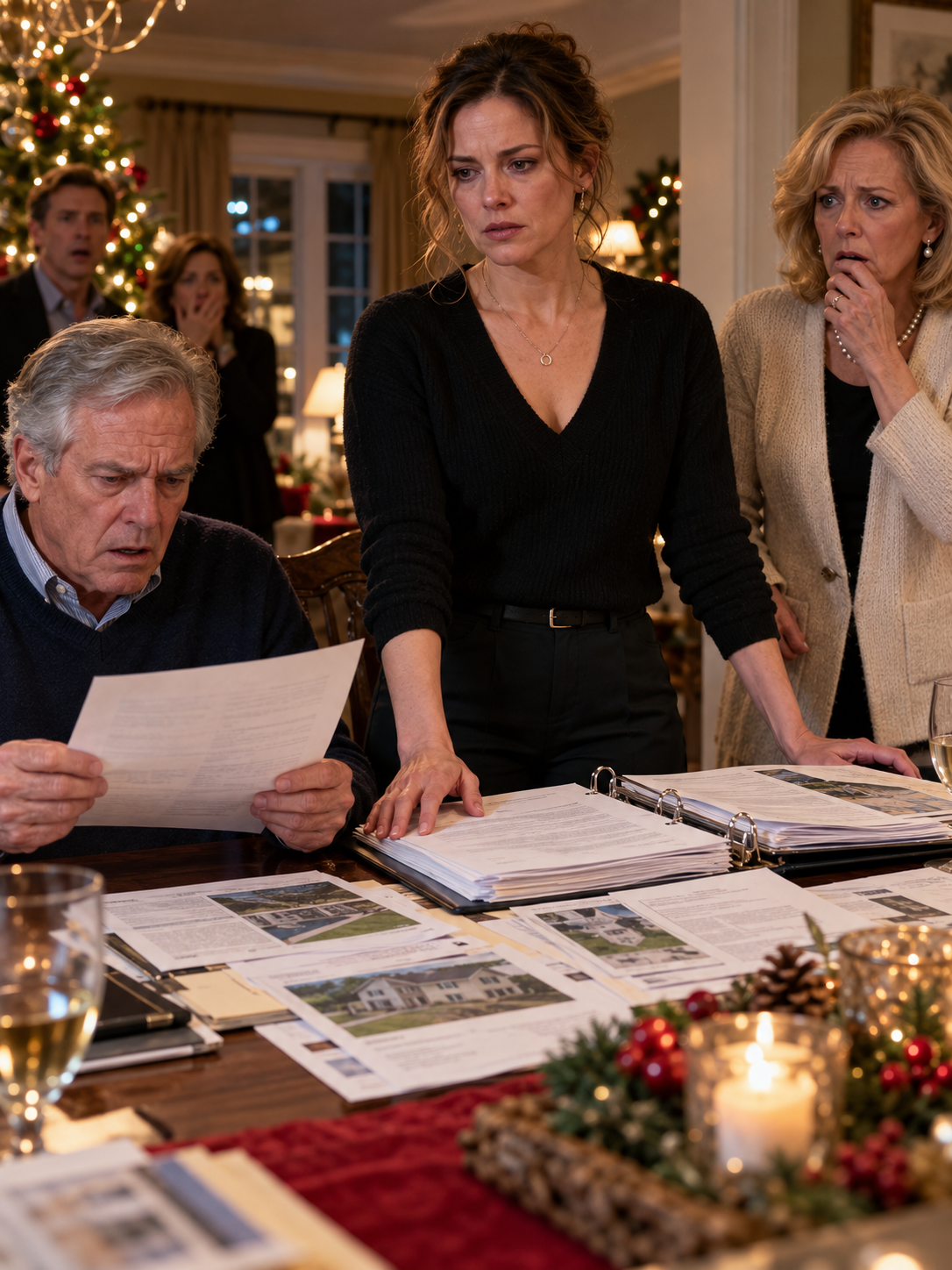
We sat at the dining table. Mom had three folders in front of her, but she did not begin with paperwork.
“I’m selling the house,” she said.
Dad looked at her. “Why?”
“Because neither of us needs it. Because I can’t afford to maintain it alone without drawing from investments. And because every conversation about it now begins with the lie I told Claire.”
I waited.
Mom slid a proposed property agreement toward Dad. Under their separation negotiations, he had a marital interest in the home. She proposed selling it, dividing the net proceeds according to their attorneys’ agreed calculation, and using part of her share to fund the remaining settlement obligations and establish a reserve for the Florida property occupied by Melissa.
“That’s sensible,” Dad said.
Mom gave him a tired look. “You always liked sensible after someone else did the difficult part.”
His expression tightened. Months earlier, that line would have started a fight. Instead, he nodded.
“Sometimes I did.”
Mom seemed almost disappointed that he did not defend himself.
Then she turned to me. “I found something while cleaning out the attic.”
She pushed the smallest folder across the table. Inside were copies of my college tuition statements and canceled checks from my parents. I knew they had helped with school, but I had forgotten the amount. Over four years, they had contributed roughly $31,000.
“This is what I meant when I said we gave you a foundation,” Mom said.
I looked up. “Are you showing me this because you think it cancels what happened?”
“No.” She paused. “I think I used it that way in my head.”
That admission was different from the birthday card because it was specific.
She told me that after I graduated and began earning more, she started mentally converting every sacrifice she had made as a parent into a debt I could repay. At first, she said, the monthly money genuinely helped during Dad’s injury. But when the immediate crisis passed, stopping the transfers felt to her like voluntarily giving up security. Each month that I paid without complaint made the arrangement seem more normal.
“Then I started thinking you didn’t mind,” she said.
“I minded.”
“You never said so.”
“You told me the alternative was losing your house or not paying medical bills.”
She nodded. “I know.”
There it was again: no excuse attached.
Dad asked whether she regretted helping Melissa.
“No.”
“Do you regret buying the first condo?”
Mom considered it. “I regret how I funded the life around it. I don’t regret wanting something that was mine.”
I could respect the distinction even if I disliked what she had done.
“And me?” I asked. “Do you regret what it cost me?”
Her eyes filled, but she did not perform the tears. She looked down at the table.
“I didn’t let myself calculate that.”
“Why?”
“Because then I would have had to stop.”
That was the answer I had needed more than an apology. Not because it was comforting. Because it was honest.
We spent the afternoon sorting items from the house. Dad wanted his tools and records. Mom had already boxed most of her clothes. I found my high school yearbooks, a cracked snow globe, and a folder of report cards. In the garage, Dad uncovered the old red toolbox he had used when teaching me to change a tire.
“Take it,” he said.
“I have tools.”
“I know. That’s why I’m not saying you need it.”
I smiled despite myself and took the box.
The house sold that summer to a family with two young children. I attended the closing only because part of Mom’s settlement payment to me was disbursed from her proceeds. When the wire arrived, I did not feel victorious. I felt finished with one category of uncertainty.
Dad eventually converted the legal separation into a divorce filing. He told me the decision was not punishment for the money. It was recognition that he no longer trusted the marriage enough to rebuild it. Mom did not contest the divorce after the property terms were finalized.
Our extended family fractured in quieter ways. Carol remained close to both of them but stopped keeping secrets for either. Some relatives believed I had gone too far by involving lawyers. Others thought I should have pursued every dollar. I stopped arguing with both groups. They had not lived my finances, and I no longer needed a family vote to validate my boundary.
Then, almost a year after the Christmas conversation, Mom called.
I watched her name ring across my screen until voicemail picked up.
She left a message asking whether I would meet her for coffee on December 23.
“Not Christmas,” she said. “I don’t want to turn the holiday into a test. Just coffee. If you say no, I won’t ask again.”
I listened twice.
For fourteen years, my relationship with my mother had been built around requests she framed as obligations. This was the first request I could remember that arrived with a genuine exit.
I called her back and said yes. Afterward, I sat with the decision instead of congratulating myself for being generous. Meeting her was not forgiveness, and refusing her would not have made me cruel. I was choosing a conversation because I wanted it, not because she had earned access to me.
But before we met, I decided on one condition of my own: I would not go there to restore the old relationship. If anything survived between us, it would have to be something neither of us had lived before.