

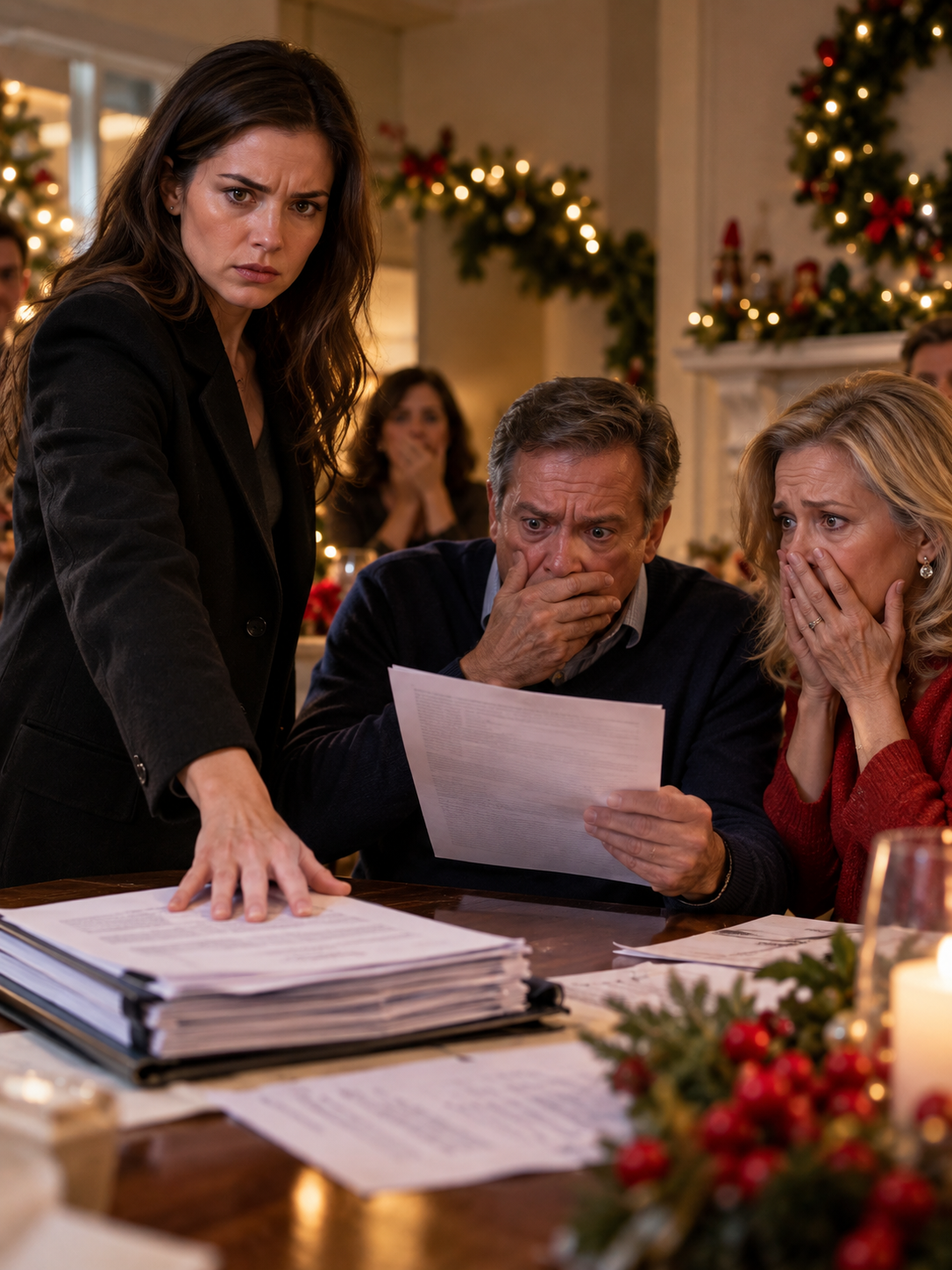
We met at my parents’ house on a Sunday afternoon. No relatives. No binders. No wine on the table. Just the three of us and fifteen years of things that had never been said honestly.
Mom looked older. Not fragile, exactly. Just stripped of the energy she usually used to control a room.
“I’m not going to ask you to forgive me,” she said.
Dad remained standing.
“Start with the truth.”
She nodded.
After his accident, she said, she had genuinely been afraid. For several months, money really was tight. I had begun helping, and she discovered how easy it was to keep the money coming simply by letting me believe the emergency had never ended.
“At first, I thought I’d stop after a few months.”
“And then?” I asked.
“Then I saved some. It made me feel safe.”
Dad watched her without speaking.
“I was always afraid of being completely dependent on your father,” she continued. “When I saw that I could build a reserve, I started telling myself it was prudent.”
“With my money.”
“Yes.”
It was the first clean admission.
“What about the bills?”
She looked down.
“I changed some of them.”
Dad inhaled sharply.
“Why?”
“Because after a few years, Emily started asking questions. I was afraid she’d stop.”
There was no explanation that could make that sentence less serious.
“So you knew that if you told me the truth, I wouldn’t keep paying.”
Mom said nothing.
“Say it.”
“Yes.”
I leaned back in my chair. I had imagined this confession many times. In my head, it always brought relief.
Instead, I felt almost clinically calm.
“Why did you tell Aunt Linda that I owed you the money?”
That question seemed to hurt her more than the others.
“Because at some point, I started believing it.”
Dad shook his head.
Mom continued.
“I told myself we had done everything for you. That you were grown, you didn’t have children, you had a good job. I told myself the money cost you less than it would mean to us. Every time I felt guilty, I found a reason to turn what I was doing into something I deserved.”
It was horrifying precisely because it did not contain one grand, evil master plan. It was a chain of rationalizations repeated until they became a private moral system.
“Did you ever think about telling me?”
“Many times.”
“And?”
“Every year it got harder. The more money there had been, the more impossible the truth became.”
Dad finally sat down.
“What about me?”
Mom looked at him.
“I thought you wouldn’t understand.”
“You built security against me using our daughter.”
“I was afraid.”
“I’m afraid now too,” he said. “Because I don’t know which parts of our life were real.”
The conversation lasted almost two hours. It did not resolve anything. But it did establish one common ground for the first time.
The facts were no longer being denied.
I asked when she had first understood that the arrangement was no longer temporary. She thought for a long time and said it was probably when she used part of the money for the down payment on the first investment property.
Until then, she claimed, she had told herself she was simply building an emergency reserve.
“And after that, you couldn’t tell me,” I said.
She shook her head.
“After that, I didn’t want to tell you.”
The correction was small and decisive.
Dad asked why she had not tried to create independence through different work, shared savings, or a direct conversation with him.
“Those things felt slow and uncertain,” she said.
My transfer, by contrast, arrived on schedule.
My reliability had become the convenience around which she built her excuses.
Before we ended, I asked something that had nothing to do with tracing money.
“When you saw me skipping vacations, didn’t you ever wonder why?”
She was quiet.
She said she had noticed some of the things I gave up, but she interpreted them as my personality. Careful. Work-focused. Not interested in luxuries.
It was a possible explanation, which made it hurt more.
She had built a version of me that made taking from me easier. If Emily did not want much, depriving Emily of things did not seem so serious.
“I don’t want you describing me in ways that make your choices convenient anymore,” I told her. “I wasn’t a person without wants. I was a person who kept putting them at the bottom of the list.”
Before I left, Mom stopped me near the front door.
“Emily, I can pay back a significant amount. I’ll have to sell things.”
“We’re not deciding that here.”
“I want to avoid a war.”
“So do I. But avoiding a war doesn’t mean pretending nothing happened.”
She nodded.
Dad walked outside with me. He said he planned to remain at his brother’s house and speak to a lawyer about his marriage too.
“I don’t want you making decisions for me,” he said.
“I won’t.”
He gave me a tired look.
“And I don’t want you making decisions for me anymore either.”
I knew exactly what he meant. I had spent fifteen years trying to save him from a disaster he did not even know existed.
“Deal.”
In the days that followed, Mom made a very different proposal through counsel. It involved selling two assets, making an initial payment, and then making additional secured payments. Rachel walked me through what was verifiable, what could be negotiated, and what still needed investigation.
I did not sign immediately.
For the first time in my life, I refused to confuse someone else’s urgency with my obligation.
Then I received a call from a number I did not recognize.
It was the accountant who had advised Mom years earlier. He had gotten my contact through the professionals involved and wanted to clarify one documentary point through the proper channels.
What he said would not erase Mom’s responsibility.
But it would change the way I decided to close the story.