

My three children told me, “Mom, stop calling us. We have our own lives.”
So I stopped calling.
I stopped asking them to come visit.
I stopped waiting for them to worry about me.
Then I called my attorney.
Three months later, all three of them showed up at my house expecting to spend Christmas there. My son punched the old gate code into the keypad and discovered I had changed a lot more than the locks.
My name is Margaret, though everyone calls me Maggie. I’m seventy-two years old, and I raised three children in Westchester County, New York.
Julia. Michael. Elise.
For most of my life, being their mother was the center of everything. I packed school lunches, drove carpools, made Halloween costumes, sat through soccer games and dance recitals, helped with homework, first heartbreaks, broken bones, and every childhood emergency that felt enormous at the time.
After my husband, Richard, died at fifty-nine, my children surrounded me at the funeral and promised I would never be alone.
For a while, I believed them.
Then the visits became monthly.
Then mostly holidays.
Eventually, I was always the one calling.
“I just wanted to hear your voice.”
“Maybe next week, Mom.”
“Work is insane right now.”
“I can’t talk.”
I kept making excuses for them until the morning I woke with crushing pain in my chest and called 911.
I was seventy-one, and the memory of the heart attack that killed Richard was still vivid enough to make every breath feel borrowed.
I honestly thought I might die.
The hospital kept me overnight for observation. I called Julia first.
Voicemail.
Two hours later she texted.
“Oh my God, Mom. I’m so glad you’re okay. Crazy day at work.”
She never called.
Michael replied six hours later.
“Glad you’re okay. Get some rest.”
Elise waited until the next day.
None of them came.
I took a cab home alone.
After that, something shifted. I started noticing what happened when they contacted me.
Julia asked about Richard’s life insurance.
Michael wanted to know whether I had updated my estate plan and will.
Elise kept suggesting I sell the house and move into a senior living community.
My house was worth close to $900,000. I had roughly $600,000 in savings and investments, plus a life insurance policy worth about $250,000.
Suddenly I understood why conversations about my “future” so often began to sound like conversations about money.
Still, I wanted to believe I was being unfair.
So I called all three of them and asked one simple question.
“If something serious happens to me, can I count on you?”
Julia sighed.
“Mom, please. Don’t start this again.”
Michael’s voice sharpened.
“We have our own lives.”
I reminded them about the hospital.
“None of you even called me.”
“We texted you,” Elise said.
“I was scared.”
That was when Michael finally lost his patience.
“Mom, stop calling us every time you feel lonely or scared. We have our own lives. You’re fine. You have money. You need to learn how to manage on your own.”
After that call, I sat at my kitchen table and cried harder than I had since Richard died.
Then the crying stopped.
The next morning, I called Thomas Bennett, the estate attorney who had handled Richard’s affairs.
“I need to make some changes.”
Over the next three weeks, we reviewed everything.
My will. My beneficiary designations. My investments. My house. Every account my children had quietly assumed would become theirs one day.
I changed beneficiaries where it made sense. I revised the structure of my estate. I changed every lock, every access code, and every password connected to my property.
Then I upgraded the security cameras and installed a monitored gate system.
For three months, my children didn’t call.
Neither did I.
Then, two weeks before Christmas, Julia called out of nowhere.
“We’re all coming to your place for Christmas. Like old times.”
All three children. Their spouses. My grandchildren.
They had not all been to my house together in more than a year.
“Why now?” I asked.
The brightness left Julia’s voice.
“We’re worried about you. We think it’s time to talk about your future and maybe look at a living situation that’s a better fit for what you need now.”
There it was.
The house.
Again.
“I don’t want you coming here,” I said.
Julia laughed like I had made a joke.
“We’ll be there on the twenty-third.”
“No.”
I hung up.
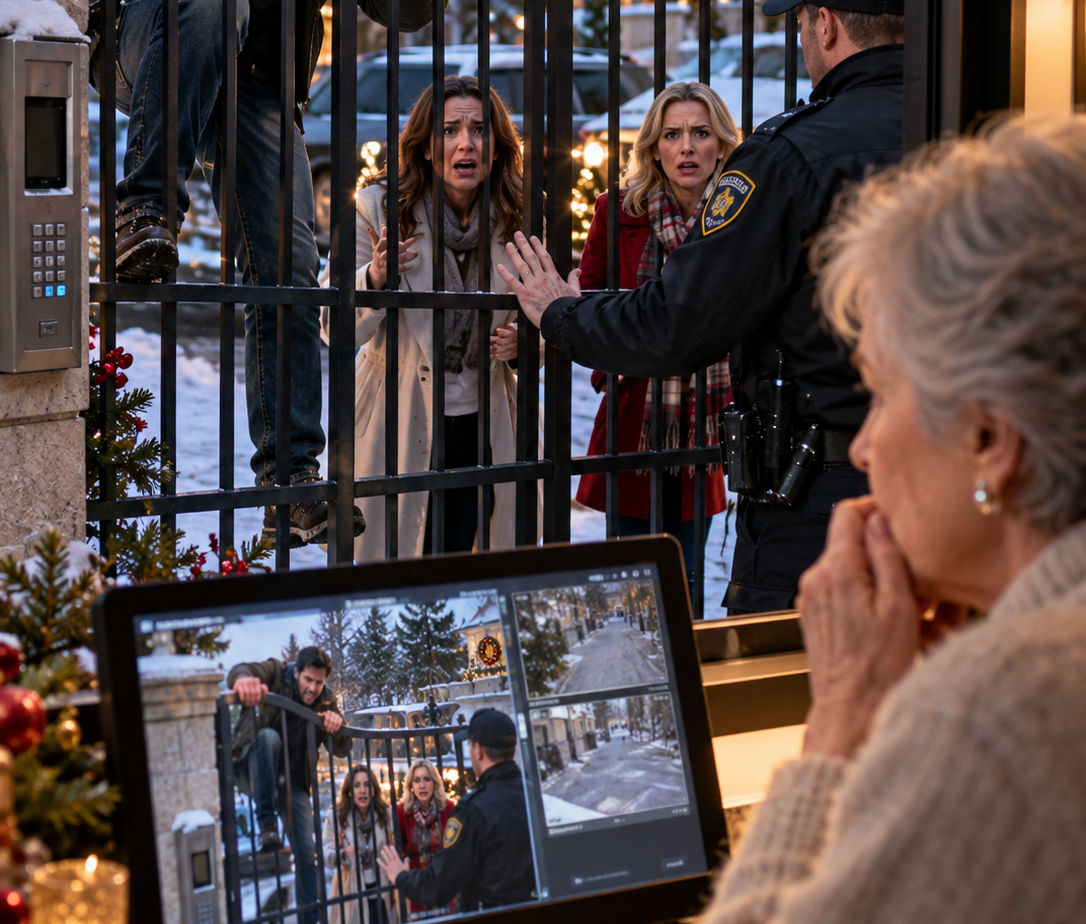
At exactly two in the afternoon on December 23, my phone lit up with a notification.
Vehicle at main gate.
I opened the security app.
Three cars.
Julia’s SUV.
Michael’s pickup.
Elise’s sedan.
Michael walked straight to the keypad and entered the old code.
Access denied.
He tried again.
Access denied.
Then Julia pressed the intercom.
“Mom, open the gate.”
I looked at my three children standing outside a house they had already started discussing as if it were future property waiting to be divided.
“No,” I said.
For several seconds, nobody moved.
Then Michael grabbed the metal gate and started climbing.
That was when a security officer from the monitoring company’s local patrol unit stepped into view behind him.
“Sir, get down from the gate now.”
My children turned.
The officer glanced toward the camera, then spoke into the intercom.
“Ma’am, these individuals aren’t on the authorized list. Do you want them removed from the property?”
I stared at my three children through the screen.
For the first time, they had no idea what their mother was about to say.
Or what else I had already changed without telling them.